
Does Home Insurance Cover Fire?
Fire is one of the most destructive risks a homeowner can face, and it’s a key reason why carrying home insurance is non-negotiable. From small kitchen accidents to large-scale wildfires, understanding how your policy protects you is essential. This guide breaks down what’s covered, what’s not, and the unique risks homeowners face in different states.
Does Home Insurance Cover Fire Damage?
Yes, most standard home insurance policies do cover fire damage, and that protection is broader than many homeowners realize. Whether it’s a kitchen grease fire, faulty wiring that sparks, or even a wildfire sweeping through your area, your policy is designed to step in.
Here’s what’s usually protected:
- Your home itself (the structure and anything permanently attached).
- Other buildings on your property, like a garage, shed, or fence.
- Personal belongings, including furniture, appliances, clothing, and electronics.
- Living expenses if you need to stay elsewhere while your home is being repaired.
That said, there are limits. Damage caused intentionally (like arson) or from ignoring obvious risks (say, leaving unsafe wiring unfixed) may not be covered.
Every policy has fine print, so it’s always smart to review your coverage and know exactly where you stand.
What About Smoke Damage?
Smoke damage from a covered fire event is usually included, even if the flames never touched your belongings. Double-check your policy, but standard home policies offer protection.
Common Fire Risks Every Homeowner Faces
While each state has unique challenges, most homeowners share these common fire risks:
- Candles: Left burning without supervision.
- Cooking and Appliances: Unattended stoves, grease fires, and lint-clogged dryers.
- Electrical Overloads: Outdated wiring, faulty outlets, or overloaded power strips.
- Flammable Materials: Gasoline, propane, or paint thinners stored too close to living spaces.
- Heating Systems: Malfunctioning HVAC systems and portable heaters.
- Holiday Decorations: Dry Christmas trees and overloaded lights.
- Smoking: Carelessly discarded cigarettes.
- Wildfire Embers: Flying embers that can ignite homes even a mile away.
Most homeowners policies protect against fire damage from these causes, but keeping your home well-maintained may also help lower your premium.
Regional Fire Risks in Colorado, Missouri, Tennessee, and Texas
Fire threats vary widely across the country, and even within states, there are high-risk communities that are important to highlight. Here’s how risk plays out in four states where homeowners should pay special attention:
| State | Unique Risks | High-Risk Areas |
| Colorado | Wildland-urban interface (WUI) where homes meet forests; human-caused fires; high winds, and drought. The 20 largest wildfires in state history have occurred since 2001. | Mountain communities west of I-25 (Colorado Springs, Black Forest, Cheyenne Mountain, Ute Pass), plus western Arvada, Westminster, and Lakewood. |
| Missouri | Dry conditions and high winds in late winter/early spring; negligence from debris burning; woody encroachment that fuels spread. | Ozarks region (Lake of the Ozarks), mid-Missouri towns like Lebanon, with dense vegetation and high wildfire likelihood. |
| Tennessee | Southern Appalachian wildfire threat; dry conditions, storm debris, and gusty winds; active fall and spring fire seasons. | Great Smoky Mountains region, including Gatlinburg, Sevierville, Pigeon Forge, and Pittman Center. |
| Texas | Two fire seasons: winter (dormant grasses + cold fronts) and summer (heat + drought). Debris burning and La Niña weather patterns increase risk. | Expanding WUI west of I-35 & I-45 (Austin, San Antonio), plus the Panhandle, which has seen the state’s largest wildfire. |
Fire Insurance vs. Home Insurance
While many people use the terms interchangeably, fire insurance and homeowners insurance are not the same:
| Feature | Fire Insurance | Homeowners Insurance |
| Scope | Covers damage caused specifically by fire. | Covers fire plus a wide range of perils, including theft, storms, and liability. |
| Availability | Once sold as standalone policies, today usually offered as part of or an add-on to homeowners insurance. | Standard policy required by most mortgage lenders. |
| Value | Useful for high-risk fire zones where insurers may exclude fire coverage from standard policies. | Provides broader protection beyond just fire, including personal belongings and liability. |
In most cases, homeowners insurance is sufficient. However, in fire-prone areas, you may need additional fire-specific coverage or state-run high-risk insurance pools.
How Coverage Protects Against Fire
Home insurance policies don’t just cover the structure of your home. They extend protection in several meaningful ways to homeowners:
- Dwelling Coverage: Repairs or rebuilds your home if it’s damaged by fire.
- Personal Property Coverage: Protects electronics, furniture, clothing, and other belongings.
- Loss of Use Coverage: Pays for hotels, meals, and temporary housing if you’re displaced.
- Liability Protection: Covers legal costs if fire spreads to another property and you’re held responsible.
Fire Safety Discounts for Home Insurance
Insurance companies often reward homeowners who take extra steps to lower fire risks. These discounts not only save you money but also make your home safer. Here are some of the most common ways you might qualify:
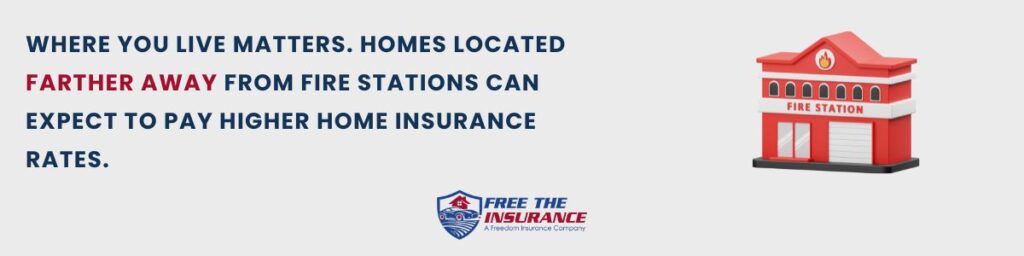
- Living near a fire hydrant or station: Homes close to emergency services usually get lower rates.
- Smoke detectors and fire alarms: Monitored systems often earn you discounts while giving you peace of mind.
- Sprinkler systems: An automatic fire suppression system can lead to significant savings.
- Fire-resistant materials: Non-combustible roofing, siding, or decking may reduce your premium.
- Wildfire prevention: Clearing defensible space, trimming trees, and following fire-safe guidelines can cut costs in high-risk areas.
The key is simple: the more proactive you are, the less risk insurers see. Always ask your carrier which fire-prevention steps qualify for discounts in your area.
If you want coverage that is there when you need it, protects against your fire risks, and saves you money, use our tool to get a free, personalized home insurance quote, or give us a call at the number at the top of the page.
Sources:
Colorado DFPC. Accessed September 2025.
