
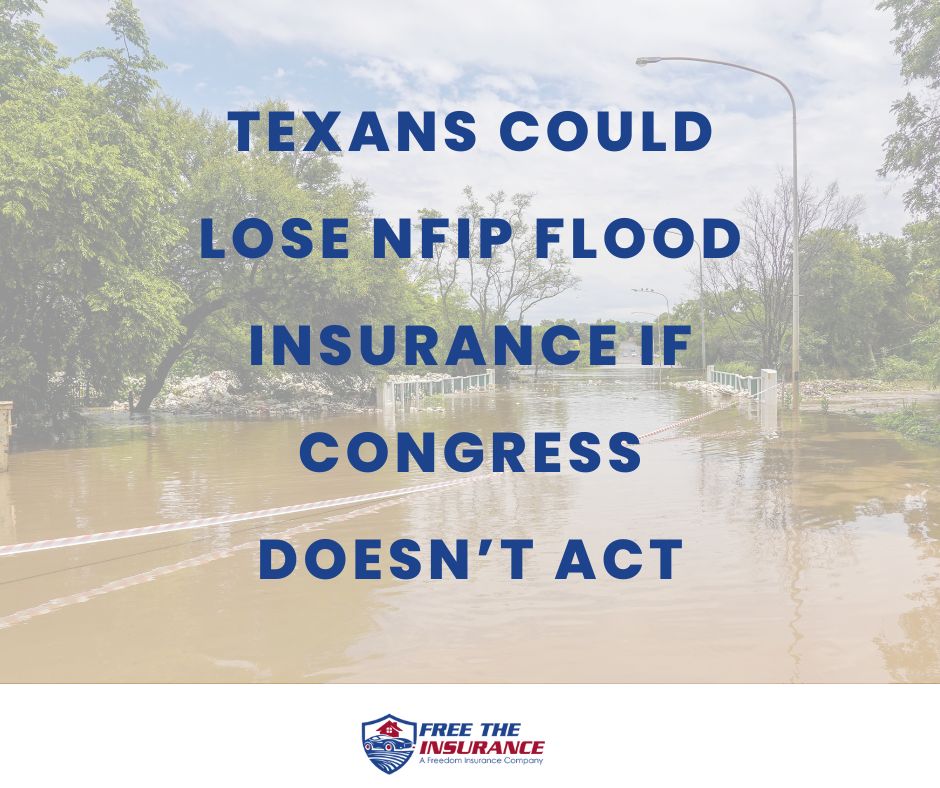
Texans Might Lose NFIP Coverage Due to Inaction by Congress
Texas knows flooding all too well. From coastal towns to urban centers, flood risk is a constant reality. Now, as Congress debates a funding deal, thousands of Texans could face another threat: losing access to flood insurance coverage right in the middle of hurricane season.
Most flood insurance policies in Texas are tied to the National Flood Insurance Program (NFIP), which will lapse if lawmakers don’t reauthorize it by September 30, 2025, posing a risk that could cause new policies and renewals to stall.
We’re breaking down the problem at hand, the recurring issues residents are facing, and how you can protect yourself in the future.
What Happens if the NFIP Expires in Texas
Texas leads the nation in flood-related losses and features over 600,000 NFIP policies in place. Around half of those policies are in Harris County.
Flood insurance is often required for homeowners with federally backed mortgages in flood zones, and without it, home sales can be delayed or canceled.
If Congress fails to act, current NFIP policyholders remain covered, but renewals and new policies would be blocked.
Unfortunately, this issue has already brought about past lapses, causing thousands of delayed home closings nationwide and limited funds available for flood claims during disasters.
Calls to Reform the NFIP
There are ongoing calls to reform the NFIP, as 4.7 million properties across the U.S. rely on the program.
According to Sen. Bill Cassidy (R-LA), “the National Flood Insurance Program is…thrown into a legal purgatory every year or even sometimes multiple times a year,” because there has been no long-term reauthorization in place.
Sen. Cassidy is advocating for legislation that would reauthorize and fund the NFIP through 2026.
These ongoing issues pose an expensive threat to homeowners in Texas and beyond, which is why it’s important to consider the alternative options offered by private carriers.
Flood Insurance Options: NFIP vs. Private Policies
Even though the NFIP is a popular option, it’s not the only way to enroll in flood insurance. Private carriers can provide coverage, which doesn’t rely on Congress to pass bills in order to have funding:
NFIP’s Write Your Own (WYO) Program
Insurers sell and service federal flood policies through the NFIP’s WYO Program. These policies are identical no matter who sells them, and the federal government assumes the financial risk, paying out claims. These policies are still tied to the same issues that federal coverage faces.
True Private Flood Insurance
In recent years, a competitive private market has grown. These policies are underwritten and backed by private insurers themselves.
They often provide higher coverage limits, broader protection (like basements or temporary living expenses), and use different risk models that may lower costs for some homeowners.
However, since the insurer bears the financial risk, some operate as “surplus lines carriers,” meaning they don’t pay into state guarantee funds. Therefore, there is still the risk of your carrier failing and, as a result, not paying your claim.
NFIP vs. True Private Flood Insurance
| Feature | NFIP Policies (Including WYO) | True Private Flood Insurance |
| Who Backs It | The federal government covers all losses | An individual insurance company assumes the risk |
| Where to Buy | Directly from NFIP or through WYO insurers like Allstate, Farmers, etc. | Private insurers offering their own products |
| Coverage Limits | Max $250,000 (building) + $100,000 (contents) | Often higher limits available (sometimes $1M+) |
| Coverage Scope | Standardized; excludes basements, living expenses, and full replacement costs | Broader options may include basements, ALE (living expenses), and full replacement value |
| Pricing | Fixed rates set by FEMA | Rates vary by insurer’s risk models (can be higher or lower) |
| Financial Security | Guaranteed by the U.S. Treasury | Dependent on the insurer, as surplus lines carriers may not pay into state guarantee funds |
| Flexibility | Identical coverage regardless of the WYO company | Customized features and endorsements available |
Why Texans Should Consider Private Flood Insurance Now
If NFIP authorization lapses, many homeowners will find themselves unable to renew. Whether or not using government-backed or private flood insurance coverage is right for you will vary from person to person.
However, it’s always important to assess your risks, understand your options, and compare them before making a decision.
Plus, private carriers may also offer stronger coverage or even lower premiums than NFIP’s fixed limits and rates.
In a state where flooding is one of the most expensive risks homeowners face, relying solely on congressional gridlock is risky.
Free The Insurance is here to help and connects Texans with a range of flood insurance options that include both federal and private coverages.
Our mission is to help you find the right protection at the lowest price. Contact us or click the link for a personalized online flood insurance quote.
Sources:
Houston Chronicle. Accessed September 2025.
